Advertising cookies do a lot of quiet work behind your marketing. These tiny files sit in a shopper’s browser, remember what they looked at, and help you show them ads that actually fit. For Shopify merchants, that can mean more sales and a clearer view of what’s working. But cookies also touch people’s privacy, and that’s why laws like GDPR and CCPA now control how you use them.
This guide covers what advertising cookies are, how they work in marketing, why they matter for your store, and how to use them without breaking any rules. We’ll also look at where things are going, since third-party cookies are slowly being phased out.
What Are Advertising Cookies?
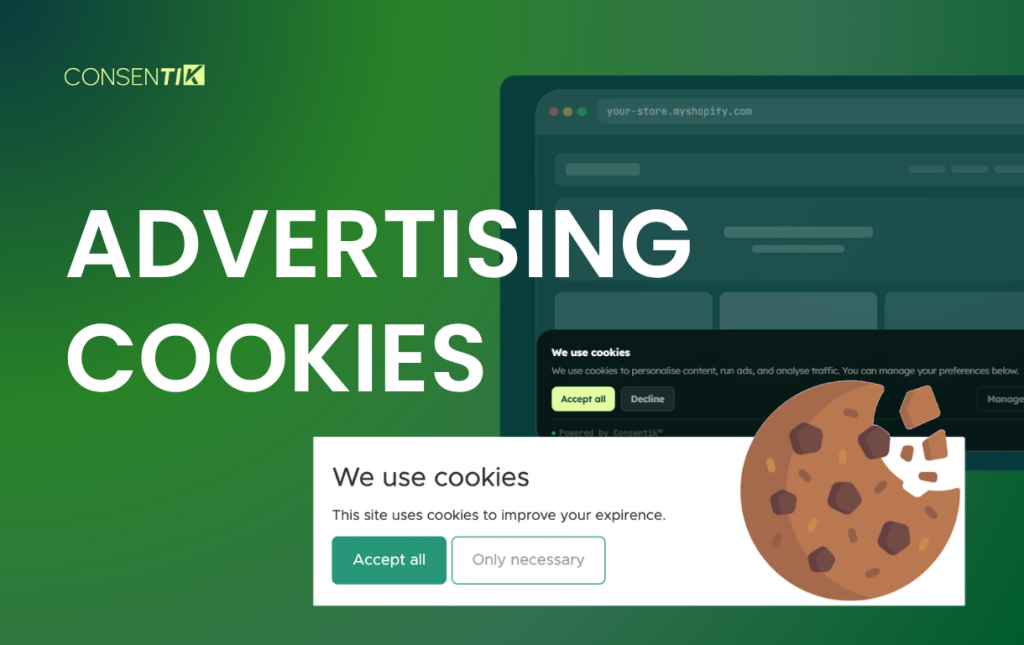
Advertising cookies are small bits of data saved in a shopper’s browser. People also call them marketing or targeting cookies. Their job is to track what someone does online so advertisers can show them better ads.
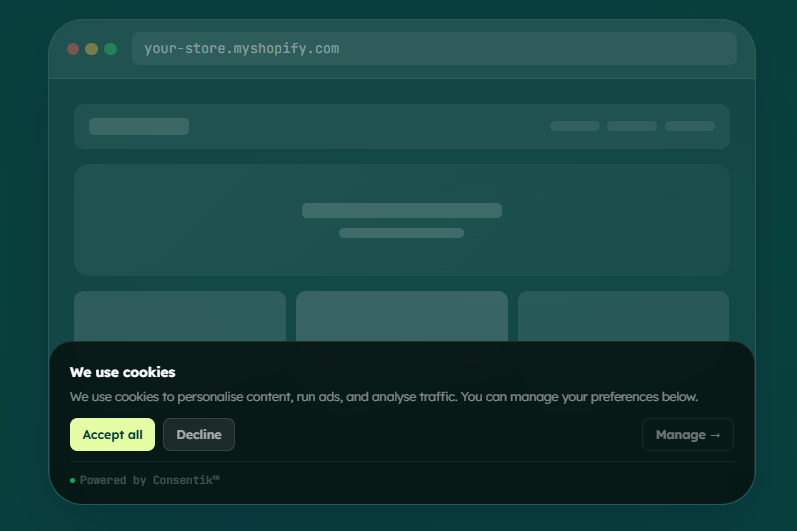
Here’s a simple example. A shopper looks at a pair of shoes in your store. The cookie remembers that. Later, those same shoes show up in ads while the person browses other sites. There are two kinds of cookies, and the difference is worth knowing.
- A first-party cookie comes from the site the shopper is on, which is your own store. It tracks what they do on your pages so you can personalize their experience. It might remember their device, their language, or the products they viewed.
- A third-party cookie comes from an outside company, like an ad network. It follows people across many sites, not just yours. This is what makes retargeting work. A shopper clicks your ad, visits your store, leaves without buying, then keeps seeing your products elsewhere. That happens because the cookie tracks them across the whole web.
For a long time, this is how online advertising worked. Cookies let advertisers learn about customers and show ads that fit. By tracking things like time on site and past purchases, they help your message reach the right person.
How Cookies Are Used in Marketing
Cookies help your marketing in a few key ways. Here’s what Shopify merchants get out of them.
Audience tracking
 Cookies record which pages people view, how long they stay, what they click, and even details like screen size. This tells you who wants what. If a group of visitors keeps looking at one product category, you’ve found a group worth targeting. The better you know your shoppers, the less money you waste on people who were never going to buy.
Personalized ads and retargeting
This is the big one. Someone looks at running shoes, then sees ads for those shoes later while reading the news. Ads like this work much better than generic ones. Retargeting goes a step further. It reaches shoppers who added something to the cart but didn’t buy. The cookie remembers them and shows the product again. For merchants, that often saves a sale you would have lost.
Measuring what works
Cookies send data to tools like Google Analytics so you can see how your campaigns are doing. Which ad brought a shopper in? Did the visit lead to a sale? How long did they stay? You can also see things like location and bounce rate. With this, you learn which tactics are worth the money and which aren’t.
Better insight, better experience
All this data shows you how shoppers act, so you can improve both your ads and your store. If people keep leaving a cart at one product, maybe the price needs a second look. Used well, cookies also make shopping smoother by showing returning visitors things they actually care about instead of random deals. Just don’t overdo it. Some shoppers find heavy tracking creepy, and that’s exactly why being open matters.
Why Advertising Cookies Matter for Your Store
Think of advertising cookies as a sharp tool. Use them right and they bring in real sales. Use them carelessly and they cost you trust, maybe even a fine.  The good side is simple. Cookies bring back interested shoppers, keep your brand on their mind, and aim your ad money at people who are likely to buy. Picture someone who looked at a jacket and left. A cookie lets you show that jacket again somewhere else and bring them back to finish. Spending on someone who already wants the product beats paying to reach strangers.
The catch is the legal side. These cookies track personal data like an IP address or browsing history, so many places treat them as extra data collection that needs the user’s permission. Skip that step and you risk fines or a damaged reputation. The fix is easy. Tell people what you’re doing and get their okay before the cookies start. That keeps you legal and shows shoppers you respect their privacy.
Privacy Concerns and Global Cookie Laws
Cookies give you marketing power, but they also make people uneasy, and you can’t ignore that.
For shoppers, the tracking can feel like being watched. Someone researches a private topic on one site, then sees ads for it somewhere completely different. Most people don’t know who’s collecting their data or what happens to it. Many feel these cookies help advertisers more than they help shoppers. That’s why public opinion turned, and why stricter privacy rules came in.
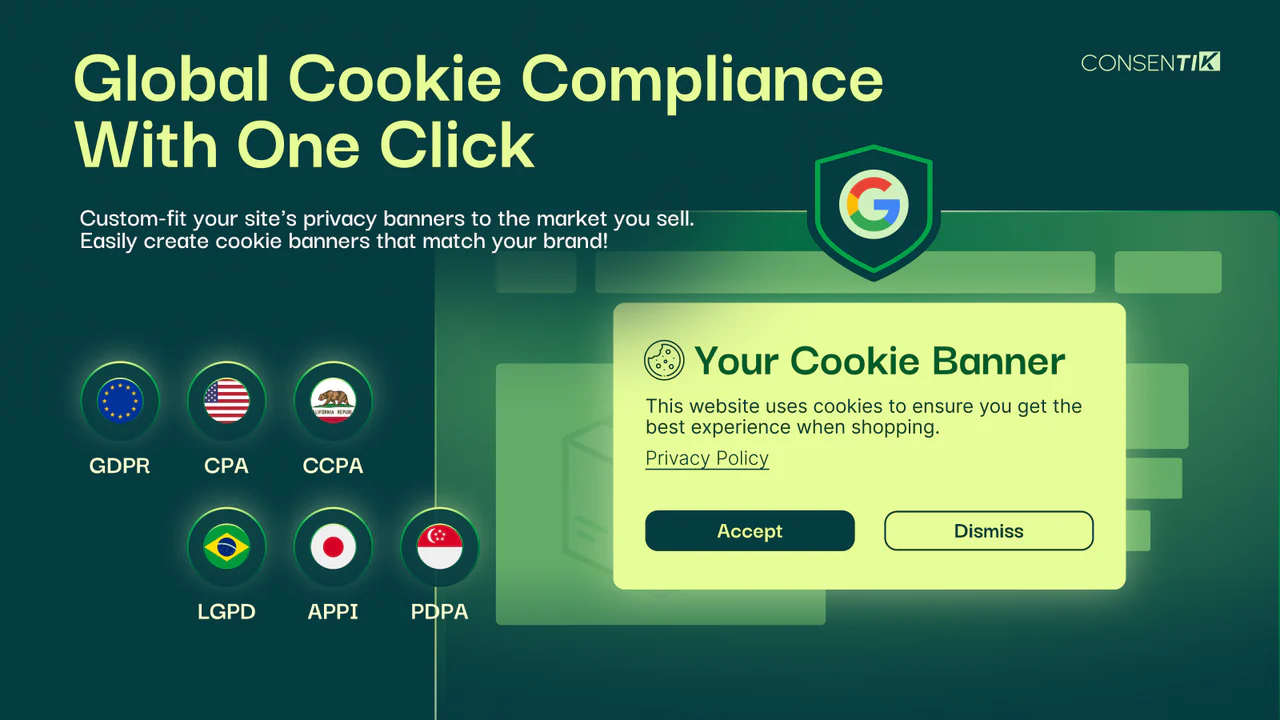
Here are the laws that matter most.
GDPR (EU and UK) is the strict one. It treats advertising cookies as personal data, so you usually need clear opt-in consent before using them. You have to tell shoppers which cookies you use and what you collect, and they have to actively agree, like clicking “Accept.” Pre-ticked boxes don’t count, and saying no has to be as easy as saying yes. If you have EU or UK customers, consent banners are a must.
CCPA and CPRA (California) work a little differently. You must explain your data practices and let people opt out of the “sale” of their data. If your cookies share data with ad networks, you need a ‘Do Not Sell or Share My Personal Information’ link (the CPRA added ‘Share’ in 2023 specifically to cover cross-context behavioral advertising) for California residents. Businesses must also honor Global Privacy Control (GPC) browser signals as valid opt-outs. There’s no prior-consent rule like GDPR, but a clear policy and an opt-out are still smart.
Other regions are catching up. Brazil, Canada, and several U.S. states have similar rules. If you sell internationally, the safe move is to treat all advertising cookies with a high bar for consent. One firm rule: you can’t use advertising cookies on sites aimed at kids under 13 without a parent’s okay.
On May 29, 2026, IAB Europe released TCF Policies v5.0.b and technical specification v2.4, which becomes mandatory for web Consent Management Platforms (CMPs) by mid-October 2026. This update specifically tightens how advertising cookies collect and transmit ad-targeting signals:
- Clear Examples for Advertising Features: Under the Features group in your cookie popup, visitors now see official IAB illustrations explaining how device data is used alongside advertising cookies. Shoppers get concrete examples of how browsing data is matched to select relevant ads.
- Explicit Cookie Storage Lifespans: CMPs must disclose maximum device storage durations for advertising cookies and state whether cookie lifespans refresh on return visits. This ensures shoppers know exactly how long retargeting cookies remain active.
- Renamed Special Feature 2: Special Feature 2 is officially renamed from “Actively scan device characteristics for identification” to “Identify devices based on information actively requested”. If your banner’s first message mentions “device scanning,” updating this copy keeps your ad tracking compliant.
- Cross-Device Advertising Consent: TCF v2.4 defines clearer rules for multi-device consent scope. When a shopper consents to ad personalization on an account, those choices synchronize across mobile and desktop without losing ad attribution signals.
- TCF v2.4 Encoded Strings: Backend consent strings now match TCF v2.4 formatting. Ad networks and Demand-Side Platforms (DSPs) increasingly reject outdated consent strings, making valid v2.4 signals critical to preventing dropped ad tracking and lost retargeting revenue.
Browsers are pushing back, too. Firefox and Safari already block third-party cookies by default, and Edge has tightened up as well. That leaves marketers with less room to rely on third-party tracking and more pressure to earn consent the right way. For stores, the practical response is simple: collect first-party data, keep consent flows clear, and build advertising strategies that still work when cookies do not.
Chrome is not making the transition any cleaner. In April 2025, Google said it would not launch a special user-choice prompt for third-party cookies in Chrome, and users would keep managing them in the normal settings menu. Then, in October 2025, Google retired most of its Privacy Sandbox APIs, including Topics, Protected Audience, and Attribution Reporting, which effectively ended its original cookie-replacement plan.
As cookie-based tracking fades, Google is leaning on signals it already receives – including IP addresses. Starting on or shortly after August 3, 2026, Google will begin using IP addresses for ad measurement and personalization for users in the EEA, UK, and Switzerland. It already receives these addresses to route traffic; what’s new is the purpose – using them to identify devices, which counts as personalization and therefore requires user consent under GDPR. Google is updating its IAB TCF registration (adding Feature 3, “Identify devices based on information transmitted automatically”) to support this. For stores, the takeaway reinforces the rest of this section: as tracking methods shift, valid consent – captured correctly by your CMP – is what keeps your Google ads and measurement compliant.
So tracking does not disappear overnight, but it is becoming less reliable and more fragmented. Some browsers still allow more tracking, some block it by default, and consent tools add another layer of uncertainty. The simple takeaway is that unlimited cross-site tracking is fading out, and stores need to update how they measure, attribute, and build audiences to stay ahead of that shift.
The laws and browser changes are real, fines do happen, and shoppers expect honesty. A store that explains its cookies openly earns more trust than one that tracks people quietly.
Make Cookie Compliance Easy with Consentik
By now, you can see the problem. Doing cookies the right way means consent banners, a clear policy, opt-outs, consent records, and keeping up with laws in every market you sell to. That’s a lot to juggle, especially when you’d rather be running your store than reading privacy rules.
And the stakes keep rising. Privacy laws like GDPR, CCPA, and LGPD don’t all work the same way, so a setup that’s fine in one country can fall short in another. Get it wrong and you risk fines, lost trust, and broken analytics. On top of that, when shoppers block cookies, your Google Analytics and ad data can go fuzzy, leaving you guessing about what’s actually working. Handling all this by hand, across your whole site, just isn’t realistic for most merchants.
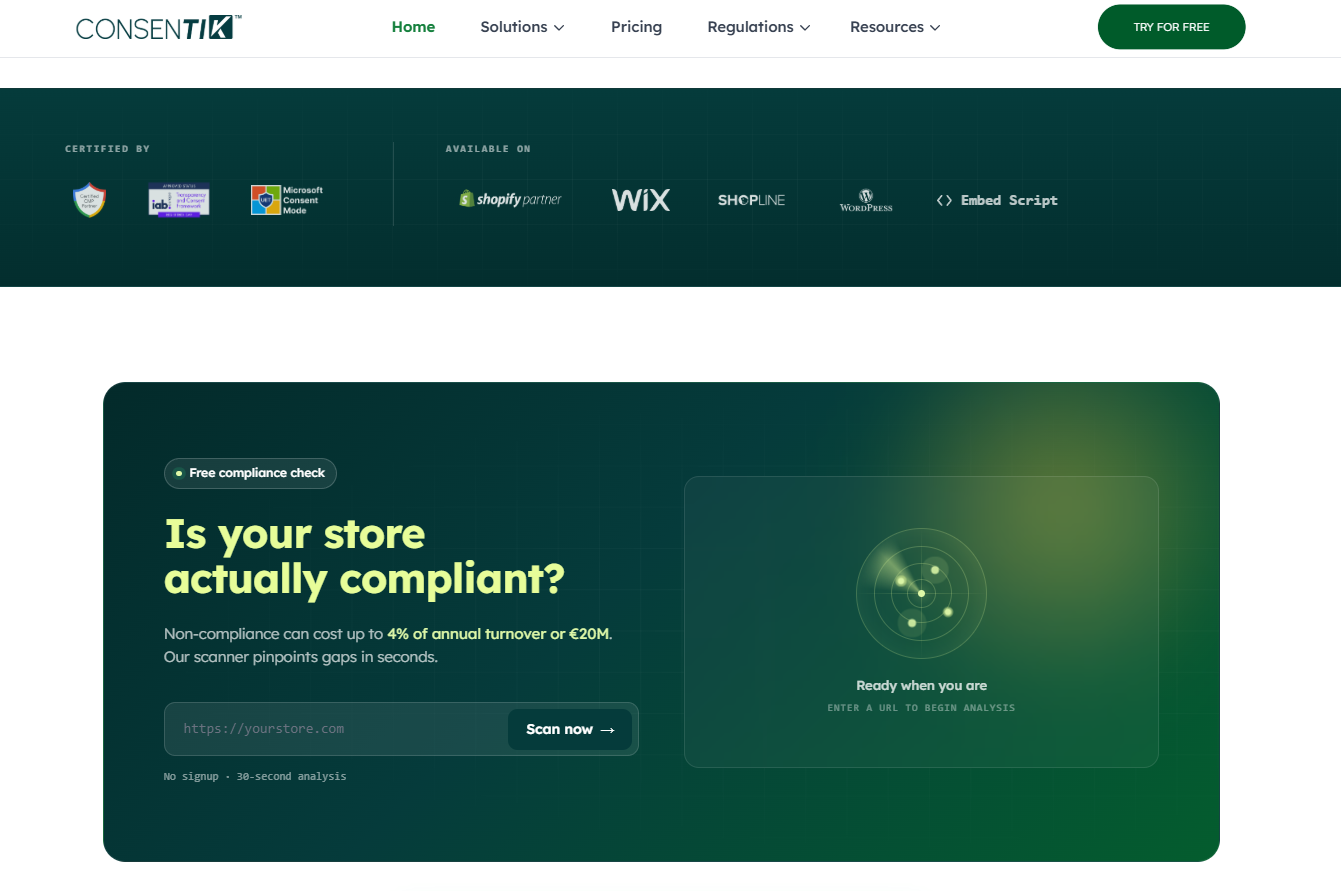 This is where a Consent Management Platform helps, and Consentik is built for exactly this. It handles cookie compliance for your online store so you don’t have to piece it together yourself. It works across major platforms too, so it fits whatever you’ve built your store on. Here’s what this app does:
- Customizable cookie banner. Build consent banners that match local privacy laws, automatically update to IAB TCF v2.4 & TCF Policies v5.0.b and work with Google Consent Mode V2, styled to fit your store.
- Website compliance scanner. Scan your site to spot privacy issues, then follow clear steps to fix them.
- Advanced Google Consent Mode. Keep your analytics and ad measurement accurate while still respecting what each shopper agreed to.
- Automated consent management. Track, store, and manage consent data in real time, with no manual logging.
- Seamless integrations. Connect with Google Consent Mode V2, Web Pixel, Sklik, Microsoft UET, and even headless stores.
The payoff is real. You lower your risk of fines, build trust by giving shoppers honest control over their data, and cut the busywork through automation. Best of all, your marketing and analytics tools keep doing their job while you stay on the right side of privacy laws.
The Future of Advertising Cookies
The cookie world is changing fast, and knowing where it’s headed helps you stay ready.
Third-party cookies are fading
Legal pressure and the demand for privacy are pushing browsers to drop them, and they’ll likely be rare before long. Safari and Firefox block them now, and Chrome is building alternatives. Retargeting through outside networks will get harder, so new methods are on the way.
Shoppers hold more power now
Many turn down non-essential cookies, and privacy tools make blocking easy. That makes consent harder to get, but it rewards stores that play it straight. When people see the benefit, like cookies that remember their preferences, they’re more willing to say yes. Privacy has become a selling point.
First-party data is taking over
This is data you collect directly, with permission, like emails, purchase history, and on-site behavior. It’s more accurate and far less invasive, since you’re not following people around the web. Account sign-ups, loyalty programs, and quizzes all help. A strong sign-up page does a lot of that work, and a Shopify landing page builder lets merchants build high-converting opt-in pages with drag-and-drop and no code, so you can collect first-party data in a clean way.
AI is giving contextual ads new life
Instead of tracking a person, they match ads to the page content, like a gear ad on a sports article. Modern AI is making contextual targeting smarter, which is why it is getting fresh attention again across the industry.
So what should you actually do? Keep an eye on cookie news and any new tools Shopify rolls out. Build direct relationships through sign-ups, emails, and content people want. Get a solid consent system in place, since it will support your future data work. And stay open to testing alternatives like contextual ads.
Conclusion
Advertising cookies have powered online marketing for a long time, helping Shopify stores create personal experiences and ads that convert. But that power comes with strings. The same tracking that drives sales worries shoppers, and both they and regulators now expect openness.
The way forward isn’t hard. Get consent, explain what your cookies do, and offer real opt-outs that meet GDPR and CCPA. That keeps you legal and earns trust, and trusting customers come back. At the same time, the industry is moving toward first-party data and privacy-first tools. Understand those shifts, respect how people feel about their data, and you’ll keep reaching customers without losing their trust.