In late 2024, LinkedIn received a €310 million fine for violating EU privacy laws. Ireland’s Data Protection Commission found that the platform used personal data for targeted ads without proper permission and failed to clearly inform users about how their information was being used.
If you run a store and sell to European customers, these same rules apply to you. This article explains what LinkedIn did wrong and how you can avoid making similar mistakes.
What Is GDPR?
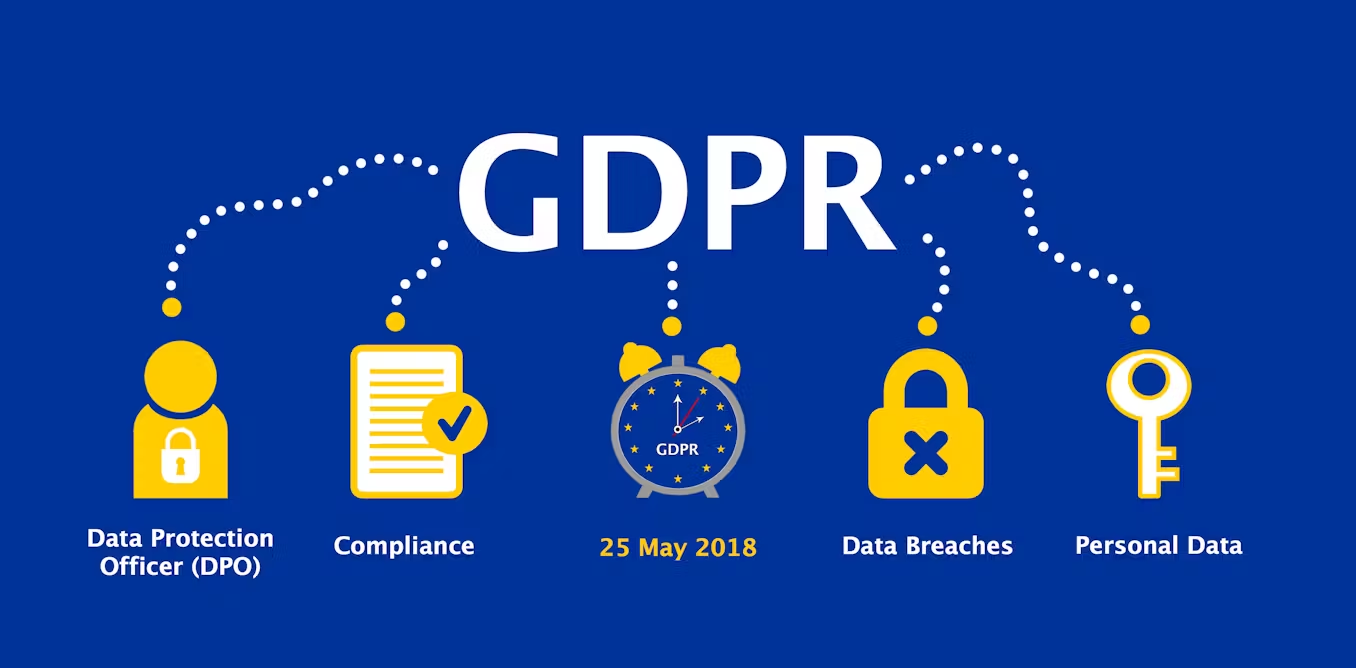
GDPR (General Data Protection Regulation) is the EU law that governs how businesses collect and use personal data from European residents. Any business handling EU customer data must follow these rules, regardless of company size or location.
Penalties can reach up to 4% of yearly global revenue or €20 million. LinkedIn’s €310 million fine proves regulators take enforcement seriously.
Understand LinkedIn’s Past Privacy Issues
This wasn’t LinkedIn’s first problem with regulators. The company has a history of pushing boundaries with user data.

LinkedIn obtained email addresses of 18 million non-members and used them to target these people with Facebook ads. These individuals never signed up for LinkedIn and had no idea their emails were being used. When confronted, LinkedIn stopped the practice. No fine was issued because this happened before GDPR took full effect.
Regulators also found LinkedIn using algorithms to predict user connections before people had made any connections themselves. The “People you may know” feature was processing personal data without consent. The DPC ordered LinkedIn to stop and delete all related data.
LinkedIn had already been warned. The company knew regulators were watching. Yet they continued with problematic advertising practices. When the 2024 fine came, it wasn’t a surprise.
For online business owners: if you receive warnings about your data practices, take them seriously. Regulators remember your history.
Why Did LinkedIn Get Fined?
LinkedIn broke GDPR rules in three main ways:
1. No Valid Legal Basis for Data Use
Under GDPR, you need a legitimate reason to use someone’s personal data. LinkedIn tried three different justifications. Regulators rejected all of them.
The Consent Argument Failed
LinkedIn claimed users had agreed to let the platform use their data for advertising. But the DPC found this consent wasn’t valid under GDPR standards.
Why? Users weren’t given clear information about what they were agreeing to. The consent language was vague. People didn’t truly understand that their browsing behavior, profile information, and data from third-party sources would be combined to target them with ads.
Under GDPR, valid consent must be freely given, specific, informed, and unambiguous. A buried checkbox in a wall of legal text doesn’t count.
The Business Interest Argument Failed
LinkedIn also claimed it had a “legitimate interest” in processing user data for advertising. GDPR does allow this-but only when the business interest doesn’t override people’s privacy rights.
The DPC decided LinkedIn’s commercial interest in selling targeted ads was less important than users’ right to privacy. The intrusion was too significant to justify.
This is an important lesson. Many businesses assume “legitimate interest” is a catch-all excuse for data processing. It’s not. You need to prove your business need truly outweighs the privacy impact on customers.
The Contract Argument Failed
Finally, LinkedIn argued that personalized ads were necessary to fulfill its contract with users. Essentially, they claimed targeted advertising was a core part of the LinkedIn service.
The DPC rejected this completely. Serving targeted ads isn’t necessary to provide a professional networking platform. Users can network and find jobs without seeing personalized advertisements.
This legal basis is meant for things like using someone’s address to ship a product they ordered. It doesn’t cover advertising activities that users didn’t specifically request.
2. Lack of Transparency
GDPR requires businesses to clearly explain how they use personal data. LinkedIn’s privacy notices didn’t do this properly.
Users weren’t told clearly that:
- Their on-platform activity was being tracked and analyzed
- Third-party data was being combined with their LinkedIn information
- This combined data was used to build advertising profiles
- These profiles determined which ads they saw
When you hide important information in complex privacy policies, you’re not being transparent. GDPR expects clear, plain-language explanations that average users can understand.
3. Unfair Data Processing
The DPC also found LinkedIn violated GDPR’s fairness principle. This means LinkedIn processed data in ways that were harmful and unexpected from the user’s perspective.
People joined LinkedIn to network professionally and find job opportunities. They didn’t sign up to have their behavior analyzed for advertising purposes without clear knowledge or consent.
When businesses use data in ways customers don’t expect, it feels like a betrayal of trust. GDPR’s fairness principle essentially asks: would a reasonable person expect this data use? For LinkedIn’s advertising practices, the answer was no.
How LinkedIn Responded To Their GDPR Fine?
When the €310 million penalty was announced, LinkedIn took a two-track approach: publicly accepting responsibility while legally fighting the fine.
The Public Statement
LinkedIn stated it believed it had been complying with GDPR but agreed to change its advertising practices within three months. A spokesperson said the company “did not intend to breach the GDPR” and was taking steps to ensure full compliance.
This is typical corporate language after a regulatory penalty. Companies rarely admit wrongdoing outright, but they also don’t openly defy regulators. The message was: we disagree, but we’ll fix it.
The Legal Challenge
Behind the scenes, LinkedIn filed a High Court appeal in Ireland. The company argued the €310 million fine was “so severe” that it amounted to a criminal punishment rather than an administrative penalty.
LinkedIn’s lawyers contend the fine is out of proportion to what actually happened. By framing it as punitive, they may be trying to invoke legal protections that apply to criminal cases.
The appeal was under review as of late 2024. Irish courts could uphold, reduce, or overturn the penalty.
Microsoft Saw It Coming

LinkedIn’s parent company Microsoft had anticipated a significant fine. In financial filings, Microsoft disclosed it expected a charge of around $425 million related to a potential LinkedIn fine from Irish regulators.
The actual €310 million penalty came in lower than expected, but it’s still a major hit. The fact that Microsoft set aside funds in advance shows they understood their advertising practices were on shaky legal ground.
This is worth noting for any business owner. If your internal team knows certain practices are legally questionable, that’s a sign you should change them-not just budget for potential fines.
How This Compares to Other Tech Fines
LinkedIn’s fine ranks among the largest GDPR penalties, though not the biggest:
| Company | Fine | Year | Reason |
| Meta (Facebook) | €1.2 billion | 2023 | Illegal data transfers to US |
| Amazon | €746 million | 2021 | Ad targeting without consent |
| Meta (Instagram) | €405 million | 2022 | Children’s data protection |
| Meta (Facebook/Instagram) | €390 million | 2023 | Forced consent for ads |
| TikTok | €345 million | 2023 | Children’s privacy settings |
| €310 million | 2024 | Ad targeting without consent |
By early 2025, total GDPR fines exceeded €5.88 billion across all industries. Looking at this list, patterns emerge. Many of these fines involve:
- Advertising practices without proper consent (Amazon, Meta, LinkedIn)
- Lack of transparency about data use
- Making consent difficult or burying it in terms of service
- Children’s data handled carelessly (Instagram, TikTok)
The Amazon case is particularly relevant to LinkedIn. Both companies were fined for ad targeting without valid consent. Both cases were triggered by complaints from the same French privacy advocacy group, La Quadrature du Net.
This shows that privacy advocates can push regulators to act-even against practices that companies consider standard industry behavior.
Don’t assume enforcement only targets tech giants. GDPR applies to any business dealing with EU personal data.
EU authorities have fined small businesses, nonprofits, and local governments for violations like unlawful surveillance or spamming customers. The penalties are smaller than what LinkedIn faced, but dealing with an investigation is disruptive and damages your reputation.
Stay GDPR Compliant with Consentik CMP
Managing cookie consent can feel overwhelming-especially when you’re trying to run a store, not become a privacy law expert. That’s where Consentik comes in.
Consentik helps website owners handle cookie consent the right way – without writing a single line of code. It automatically displays cookie banners, collects user consent, and blocks tracking scripts until visitors give permission. Whether you’re running a WordPress site, a Shopify store, or any other platform, Consentik keeps you compliant with GDPR, CCPA, and other privacy laws right out of the box.
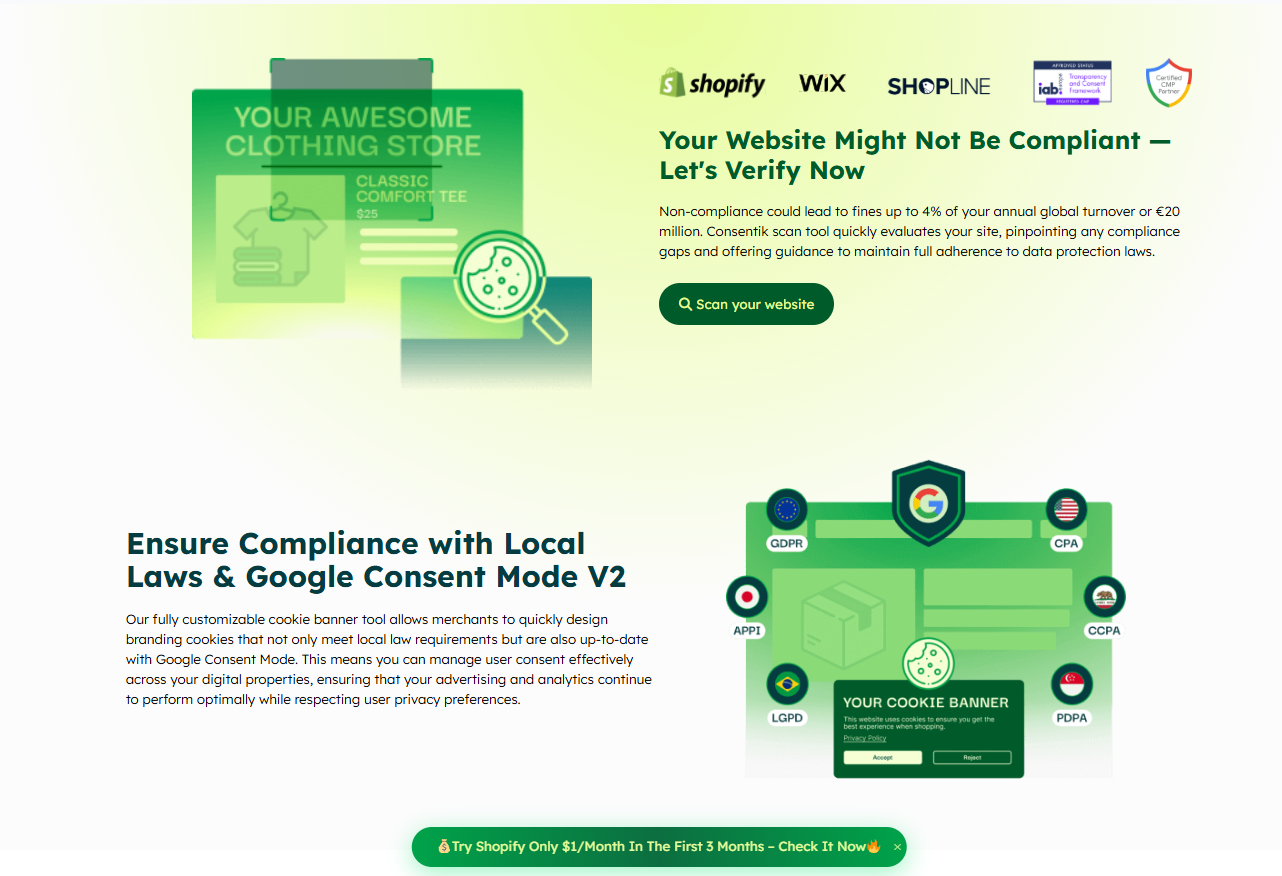
As a Google CMP Partner and Microsoft-approved CMP, Consentik meets the highest compliance standards. The platform works across multiple ecommerce platforms with dedicated apps for Shopify, Wix, and Shopline; WordPress plugin as well as embed script for custom websites.
Why merchants choose Consentik:
| Feature | How It Helps You |
| Ready-to-use templates | Set up a professional cookie banner in minutes, not hours |
| Auto-blocks tracking scripts | Stops Google Analytics, Facebook Pixel, and other tools from firing before consent |
| Multi-language support | Show cookie banners in your customers’ language automatically |
| Consent analytics | See how many visitors accept or reject cookies with clear reports |
| Google Consent Mode V2 | Maintain ad performance while staying compliant |
| Microsoft Consent Mode | Full Clarity integration for accurate tracking |
The app supports GDPR, CCPA, LGPD, and other privacy regulations-so you’re covered no matter where your customers are located. It also integrates with IAB TCF v2.2 for full industry compliance.
Instead of worrying about whether your cookie practices meet legal requirements, Consentik handles the technical details for you. You focus on selling. The app handles compliance.
Get Consentik for your store
Consentik keeps you compliant with GDPR, CCPA, and other privacy laws right out of the box.
Quick GDPR Compliance Checklist for Ecommerce Stores
Use this checklist to review your current practices:
| Category | What to Check | Check |
| Email Marketing | Email signup forms use clear, specific consent language | ☐ |
| No pre-checked subscription boxes | ☐ | |
| Every email includes an easy unsubscribe link | ☐ | |
| Unsubscribe requests are processed within 24-48 hours | ☐ | |
| You don’t add customers to marketing lists without explicit consent | ☐ | |
| Website Tracking | Cookie consent banner appears before tracking scripts load | ☐ |
| Visitors can choose which cookies to accept (not just “Accept All”) | ☐ | |
| Essential cookies are clearly separated from marketing/analytics cookies | ☐ | |
| Your cookie policy explains what each tracking tool does | ☐ | |
| Visitors can change their preferences after initial consent | ☐ | |
| Privacy Policy | Written in plain language, not legal jargon | ☐ |
| Lists all third-party services that receive customer data | ☐ | |
| Explains how long you keep different types of data | ☐ | |
| Includes contact information for privacy questions | ☐ | |
| Has been updated within the last 12 months | ☐ | |
| Data Handling | You only collect information you actually need | ☐ |
| Customer data is stored securely | ☐ | |
| You know where all customer data lives in your systems | ☐ | |
| You have a process for handling data deletion requests | ☐ | |
| Staff who access customer data understand basic privacy rules | ☐ | |
| Apps and Integrations | You’ve reviewed the privacy practices of each Shopify app you use | ☐ |
| Third-party tools are disclosed in your privacy policy | ☐ | |
| You’ve removed apps you no longer use (and their data access) | ☐ | |
| Payment and shipping integrations are GDPR-compliant | ☐ | |
| Customer Rights | You can export a customer’s data if they request it | ☐ |
| You can delete a customer’s data if they request it | ☐ | |
| You respond to data requests within GDPR’s 30-day timeframe | ☐ | |
| Customers can access and update their information in their accounts | ☐ |
The Bottom Line
LinkedIn’s €310 million fine shows regulators are serious about privacy enforcement. For online store owners, the lesson is simple: get proper consent, be transparent, and respect customer data.
Don’t wait for a regulator to come knocking. Review your data practices now and fix any gaps. Businesses that build privacy into their operations won’t just avoid fines-they’ll earn customer trust. In today’s digital landscape, that trust is one of your most valuable assets.

![2026 Latest Data Privacy Violations [With Real Cases]](https://consentik.com/wp-content/uploads/2025/12/Data-Privacy-Violations-150x150.png)